AI Chatbot vs AI Voice Agent for Small Businesses Canada
Customer expectations have changed. People no longer want to wait hours for a business to answer a simple question, respond to an inquiry, or confirm an appointment. Whether someone visits your website or calls your business, they expect quick, helpful, and professional communication.
For small businesses in Canada, meeting these expectations can be challenging. Business owners and employees already have multiple responsibilities, from managing customer inquiries to handling sales, scheduling appointments, and completing everyday administrative work.
Artificial intelligence is changing how businesses manage these interactions. Two increasingly useful solutions are AI chatbots and AI voice agents. Both help businesses communicate with customers, automate repetitive tasks, and capture opportunities that might otherwise be missed.
However, they work differently and serve different purposes.
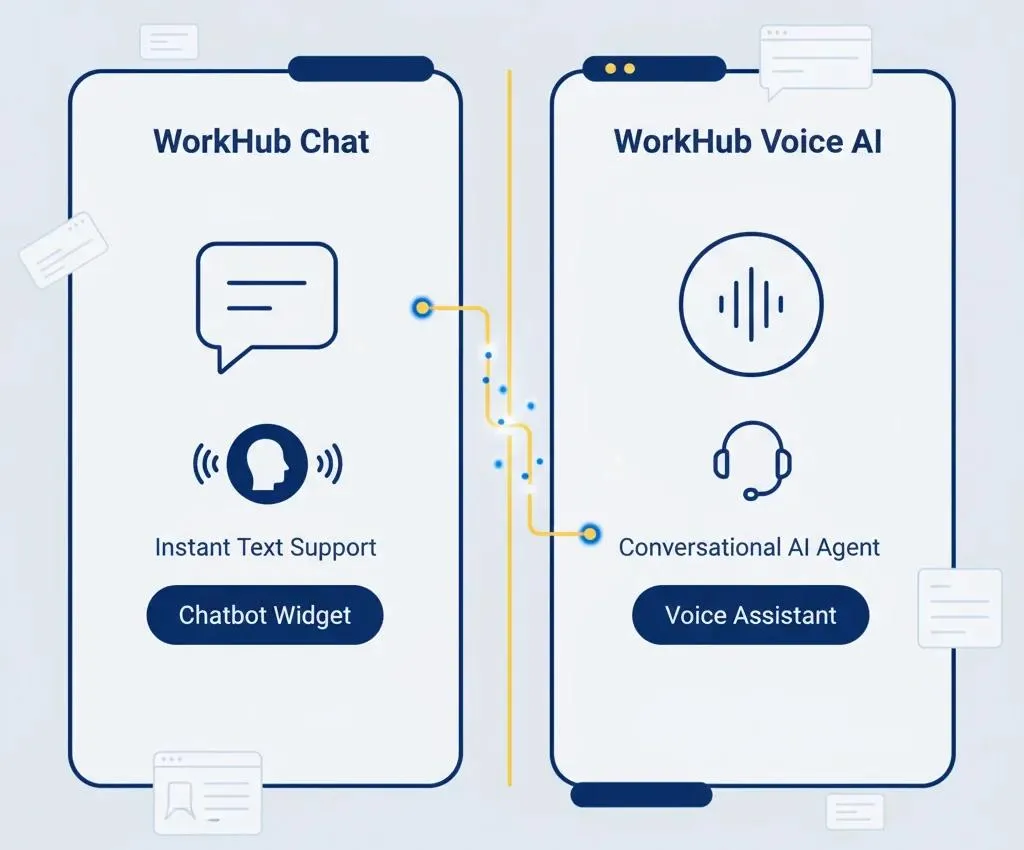
An AI chatbot communicates through text, while an AI voice agent interacts with customers through phone conversations. Understanding the difference can help you choose the right solution for your business.
In this guide, we will compare AI chatbots and AI voice agents, explain their features, explore practical business applications, and help you determine which solution makes the most sense for your Canadian business.
What Is an AI Chatbot?
An AI chatbot is a software-powered assistant that communicates with customers through text-based conversations. It can be integrated into a business website, messaging platform, SMS system, or social media channel.
Unlike traditional chatbots that depend entirely on fixed questions and predefined responses, modern AI chatbots can understand natural language, interpret customer questions, and generate relevant responses based on their configured knowledge and instructions.
For example, imagine someone visits a plumbing company's website at 10:30 PM. They want to know whether the company provides emergency plumbing services.
Instead of waiting until the next business day, the visitor can ask the chatbot directly.
The AI assistant can explain the available services, collect the visitor's contact information, ask relevant questions about the plumbing issue, and help arrange a callback or appointment.
This creates an immediate communication experience without requiring an employee to monitor the website continuously.
How Does an AI Chatbot Work?
An AI chatbot typically follows a conversational process.
1. Customer Starts a Conversation
A visitor opens the website chat window or sends a message through a supported communication channel.
2. AI Understands the Question
The system interprets the customer's message and identifies their intent. For example, the customer may be asking about pricing, services, availability, or appointment scheduling.
3. AI Provides a Relevant Response
Based on its knowledge base, instructions, and available integrations, the chatbot provides an appropriate answer.
4. Customer Information Is Collected
When relevant, the assistant asks for details such as the customer's name, email address, phone number, service requirements, or preferred appointment time.
5. The Conversation Connects With Your Business Systems
The chatbot can send information into an integrated CRM, trigger a workflow, notify an employee, or initiate a follow-up process.
Key Features of an AI Chatbot
Instant responses to common customer questions.
Automated lead capture and qualification.
Website visitor engagement.
Appointment booking assistance.
Product and service information.
Automated customer follow-ups.
CRM and workflow integrations.
Support across compatible messaging channels.
Multilingual conversation capabilities when configured appropriately.
Human handoff for complex customer requests.
The main advantage of an AI chatbot is that it allows customers to communicate with your business without needing to make a phone call.
What Is an AI Voice Agent?
An AI voice agent is an artificial intelligence system that communicates with customers through spoken conversations over the telephone.
It can answer incoming calls, understand spoken questions, provide information, collect customer details, assist with appointment scheduling, and route calls when human assistance is required.
Think of it as an intelligent virtual receptionist that can handle routine phone interactions according to your business processes.
For example, imagine a dental clinic receiving calls while its reception team is busy helping patients.
Instead of allowing incoming calls to go unanswered, an AI voice agent can answer the phone, ask what the caller needs, provide basic information, and help schedule an appointment when the required booking integration is available.
It can also capture information for a callback or transfer the caller to a team member when necessary.
How Does an AI Voice Agent Work?
An AI voice agent uses several technologies to manage a spoken conversation.
1. The Customer Makes a Phone Call
A customer calls your business using its existing or configured business phone number.
2. The AI Answers the Call
The voice agent greets the caller with a professional introduction that reflects your company's communication style.
3. The AI Understands Spoken Language
Speech recognition technology converts the caller's words into information the system can interpret.
4. The AI Generates a Response
The AI processes the request and generates an appropriate response based on its instructions, knowledge, and connected systems.
5. The AI Takes the Appropriate Action
Depending on its configuration, the voice agent may answer a question, collect lead details, schedule an appointment, send a follow-up, or transfer the call.
Key Features of an AI Voice Agent
Automated inbound call answering.
Outbound customer follow-up.
Natural-sounding voice conversations.
Appointment scheduling and rescheduling.
Customer inquiry handling.
Lead information collection.
Intelligent call routing.
After-hours phone coverage.
CRM integration.
Automated appointment confirmations.
Multilingual communication where supported.
Human escalation for complex situations.
The biggest advantage of an AI voice agent is that customers can interact with your business naturally without needing to type messages or navigate complicated phone menus.
AI Chatbot vs. AI Voice Agent: What Is the Difference?
Although both solutions use artificial intelligence to improve customer communication, their interaction methods and business applications are different.
An AI chatbot is designed for written communication, while an AI voice agent is designed for spoken conversations.
Here is a closer comparison.
Both systems can be customized around your business requirements. The right choice depends on how your customers prefer to communicate and which operational challenges you want to solve.
10 Major Benefits of AI Chatbots for Small Businesses
AI chatbots can help businesses improve their online customer experience while reducing the time employees spend answering repetitive questions.
1. Instant Website Communication
Website visitors often leave when they cannot find the information they need.
An AI chatbot gives visitors an opportunity to ask questions immediately. It can provide information about services, business hours, pricing guidelines, and other common topics based on the information supplied to it.
This helps create a more responsive website experience.
2. Capture More Website Inquiries
Not every visitor is ready to call your business or complete a contact form.
A chatbot provides another way to start a conversation. It can ask relevant questions, collect contact information, and send qualified inquiries to your CRM.
3. Reduce Repetitive Customer Questions
Employees frequently answer the same questions throughout the day.
An AI chatbot can handle common inquiries automatically, allowing staff to concentrate on more complicated customer requests.
4. Support Customers Outside Business Hours
Your website remains accessible even when your office is closed.
A configured chatbot can continue answering supported questions, collecting information, and guiding customers toward the next step.
5. Improve Lead Qualification
A chatbot can ask visitors about their requirements, budget range, service location, and preferred timeline.
These answers help your sales team understand the inquiry before making direct contact.
6. Simplify Appointment Requests
Customers can use chat to request appointments or select available booking times when the chatbot is connected to a scheduling system.
This reduces unnecessary back-and-forth communication.
7. Create a Consistent Customer Experience
A properly configured chatbot follows your business instructions, communication guidelines, and approved knowledge.
This helps maintain consistent responses across supported conversations.
8. Connect Website Conversations With Your CRM
When integrated with a CRM, chatbot conversations can become part of an organized customer management process.
Your team can access contact information, inquiry details, and relevant conversation history in one place.
9. Support Multiple Communication Channels
Depending on the platform and integrations, AI chat assistants can operate across websites, SMS, and supported social messaging channels.
This allows businesses to communicate with customers through more convenient channels.
10. Scale Customer Engagement
As website traffic and inquiries increase, an AI chatbot can handle multiple conversations simultaneously, subject to platform capacity and configuration.
Businesses can expand customer engagement without requiring an employee to respond manually to every routine question.
10 Major Benefits of AI Voice Agents for Small Businesses
AI voice agents are especially valuable for businesses that depend on phone calls for customer inquiries, bookings, and sales opportunities.
1. Answer Incoming Calls Automatically
Every unanswered call represents a potential customer interaction that may need attention.
An AI voice agent can answer configured incoming calls and collect the caller's information instead of allowing every call to go directly to voicemail.
2. Provide After-Hours Phone Coverage
Customers do not always call during regular office hours.
An AI voice agent can provide phone coverage outside normal working hours, answer supported questions, capture inquiries, and arrange callbacks or appointments.
3. Reduce Reception Workload
Receptionists often manage several responsibilities simultaneously, including greeting visitors, answering phones, scheduling appointments, and handling administrative tasks.
A voice agent can take care of suitable routine phone interactions so employees can focus on customers who need personal assistance.
4. Schedule Appointments Over the Phone
Customers can request appointments through natural voice conversations.
When connected to a calendar or booking platform, the AI agent can check available times and assist with scheduling according to configured rules.
5. Manage Outbound Follow-Ups
AI voice agents can also support outbound communication.
For example, they may call customers to confirm appointments, follow up on inquiries, or provide reminders when the business has configured an appropriate process.
6. Collect Important Customer Information
The voice agent can ask callers for their names, contact details, service requirements, and other relevant information.
These details can then be transferred into the business's CRM.
7. Improve Call Routing
Not every caller needs the same department.
A configured voice agent can identify the reason for a call and direct it to the appropriate team member or department.
8. Maintain Consistent Phone Communication
An AI voice agent follows its configured greeting, conversation structure, and business instructions.
This helps businesses provide a consistent initial phone experience.
9. Support Multiple Languages
Businesses serving diverse communities may benefit from multilingual voice interactions.
Available languages and voice quality depend on the selected platform and configuration. This is particularly useful for Canadian businesses serving customers with different language preferences.
10. Handle Routine Calls at Greater Scale
An AI voice agent can manage multiple routine call interactions according to system capacity and call routing configuration.
This can be useful during busy periods, seasonal demand, and times when employees are unavailable.
Which Industries Benefit Most From AI Chatbots and Voice Agents?
Different businesses have different customer communication requirements. Some receive most inquiries through their websites, while others depend heavily on phone calls.
Here are some examples of how both technologies can support different industries.
1. Home Service Businesses
Plumbers, electricians, HVAC companies, cleaning services, and contractors frequently receive inquiries about pricing, service availability, and emergency assistance.
AI Chatbot Use Cases:
Answer questions about available services.
Collect property and service details.
Capture customer contact information.
Help visitors request estimates.
Qualify incoming website inquiries.
AI Voice Agent Use Cases:
Answer incoming service calls.
Capture emergency service requests.
Schedule estimates and consultations.
Manage after-hours inquiries.
Route urgent calls to the appropriate person.
2. Dental and Medical Clinics
Healthcare practices receive calls and online inquiries about appointments, operating hours, and general administrative information.
AI Chatbot Use Cases:
Answer approved general questions.
Provide clinic information.
Assist with appointment requests.
Direct visitors to relevant resources.
AI Voice Agent Use Cases:
Answer routine administrative calls.
Assist with appointment scheduling.
Provide opening-hour information.
Route callers to clinic staff.
Healthcare businesses must configure these systems carefully to protect personal information and ensure that clinical or emergency matters are handled by qualified professionals.
3. Law Firms
Legal practices receive inquiries from potential clients who want information about services, consultations, and the next steps in their legal matter.
AI Chatbot Use Cases:
Collect initial inquiry details.
Identify the general legal service required.
Provide basic firm information.
Assist with consultation requests.
AI Voice Agent Use Cases:
Answer incoming client calls.
Capture caller details.
Schedule consultations.
Route urgent inquiries to appropriate staff.
AI systems should not provide legal advice or make decisions that require a licensed legal professional.
4. Real Estate Agencies
Real estate businesses often manage inquiries about properties, viewings, locations, and buying or selling services.
AI Chatbot Use Cases:
Answer property-related questions using approved listings.
Collect buyer and seller requirements.
Capture viewing requests.
Qualify potential clients.
AI Voice Agent Use Cases:
Answer property inquiry calls.
Collect viewing preferences.
Schedule property appointments.
Follow up with interested prospects.
5. Automotive Businesses
Car dealerships, repair shops, and automotive service providers receive inquiries about vehicle availability, service appointments, and repair requirements.
AI Chatbot Use Cases:
Answer frequently asked questions.
Collect vehicle details.
Assist with service booking requests.
Capture sales inquiries.
AI Voice Agent Use Cases:
Answer dealership calls.
Schedule service appointments.
Handle basic vehicle service inquiries.
Route callers to sales or service departments.
6. Marketing and Consulting Agencies
Agencies often receive inquiries about services, pricing, consultations, and project requirements.
AI Chatbot Use Cases:
Explain available services.
Qualify potential clients.
Collect project information.
Schedule discovery calls.
AI Voice Agent Use Cases:
Answer incoming consultation calls.
Capture potential client information.
Schedule introductory meetings.
Follow up on suitable inquiries.
7. Salons and Beauty Businesses
Salons, spas, and beauty studios rely on appointments and regular customer communication.
AI Chatbot Use Cases:
Share service information.
Answer common booking questions.
Collect appointment requests.
Provide business-hour information.
AI Voice Agent Use Cases:
Answer phone inquiries.
Schedule and reschedule appointments.
Confirm bookings.
Manage routine customer calls.
The best implementation depends on each business's booking system, communication preferences, and operational requirements.
Ready to Automate Your Customer Communication?
Stop letting missed calls, unanswered messages, and delayed follow-ups slow down your business.
Discover how Xalovo AI can help you build a smarter customer communication system.
CTA: Book Your Free Demo Call
Website: https://xalovo.ai/


